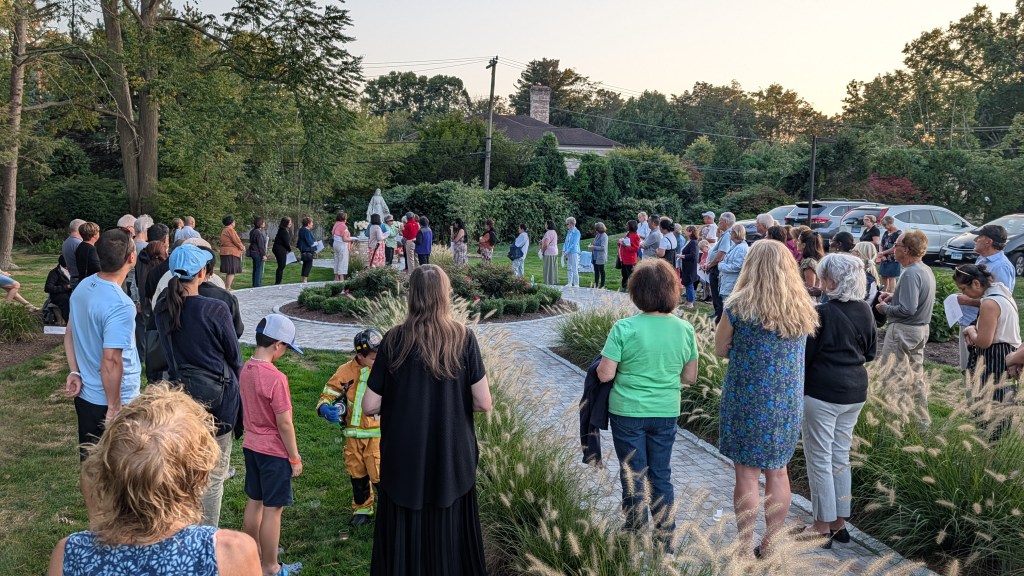
Last Sunday we hosted a living rosary in our beautiful Marian Garden in anticipation of the feast of Our Lady of the Rosary (10/7). The living rosary devotion involves a group of at least 60 people (we had about 80), with each person representing one of the “beads” of the rosary. The group’s progression through the rosary is marked by candles which are lit and held by those who have already led the group in prayer. When the rosary is finished, there are 60 people holding lighted candles, which enhanced the beauty that evening of Our Lady’s magnificent garden on our campus.
The feast of Our Lady of the Rosary was originally called the feast of Our Lady of Victory, which commemorated the improbable maritime victory of a coalition of southern European nations against an invading Ottoman fleet at the Battle of Lepanto in 1571. As the European forces were smaller in number, defeat seemed likely. And so, Pope Pius V urged Catholics throughout Europe to pray the rosary, asking Our Lady to intercede on behalf of the Christian forces. The decisive victory, attributed to the intercession of Mary, stopped all future advances of the Ottoman Empire into Europe, effectively halting the westward expansion of Islam. In 1572, Pope Pius gave the feast day its current name. Over the centuries its popularity grew, especially during the reign of Pope Leo XIII (1878-1903), who had an intense devotion to the Blessed Mother through the rosary, exhorting Catholic everywhere: “Trust Mary. Implore her aid!”
One of the things that made last Sunday’s gathering in the Marian Garden so moving was the sound of the different accents of those reciting Our Lady’s prayer. There were Pilipino accents, Italian accents, Irish accents, Polish accents, Albanian accents, Indian accents, and Spanish accents – all united in entrusting their intentions to the Mother of God, imploring her aid. It was a reminder that devotion to Mary transcends ethnicity, language, skin color, and class. Jesus gave her to all of us, no matter who we are or where we are from. This should be a consolation to hearts rightly troubled by current events at home and abroad. It should also give us confidence that we are not without hope, for we have recourse to Our Lady, especially through the powerful devotion of the rosary, which can bring about even the most improbable of victories.
posted 10/11/25
 The Parish of St. Cecilia-St. Gabriel